

The Complete Guide to Indian Spices
Every Indian kitchen has one. A steel dabba, round, with little compartments inside. Turmeric in one, cumin in another, and somehow the lid never quite closes properly. Mine has a dent on the side from a decade of being dropped. That box is Indian cooking in miniature.
At Saptrishi we go by khao wahi jo sehat ke liye sahi. Good food starts with spices you trust. That's the whole idea.
Below: the spices you'll actually reach for, how they act in a hot pan, what to check before you buy, and how to stop them going stale.
The Essentials
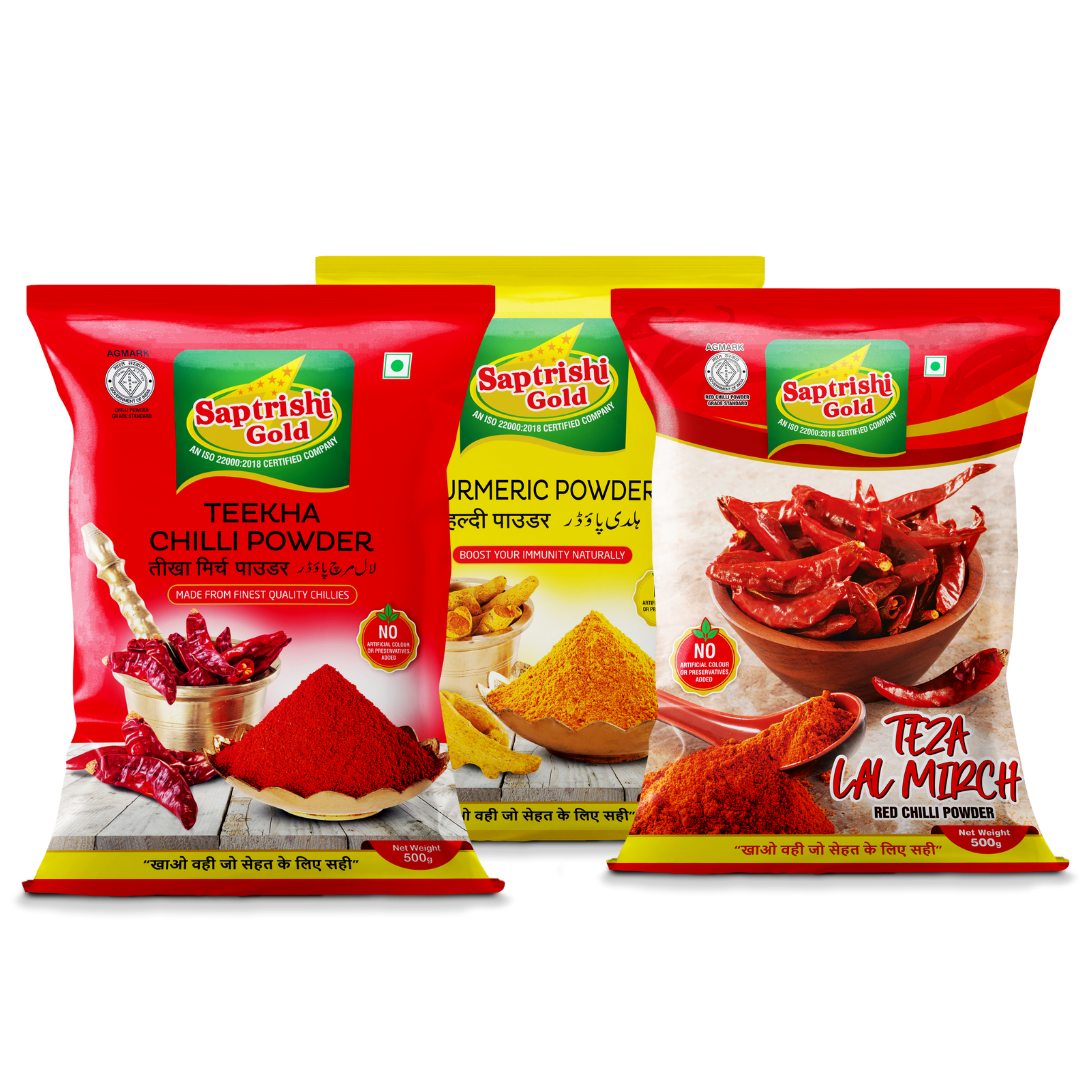
Haldi. Golden, earthy, faintly bitter. It will stain your fingers and your counter and one white shirt you loved. Put it in early so the raw edge cooks out. Too much and the dish turns harsh — you can't undo that. Many homes still stir a pinch into warm milk on a cold evening. Haldi doodh. You probably grew up on it.
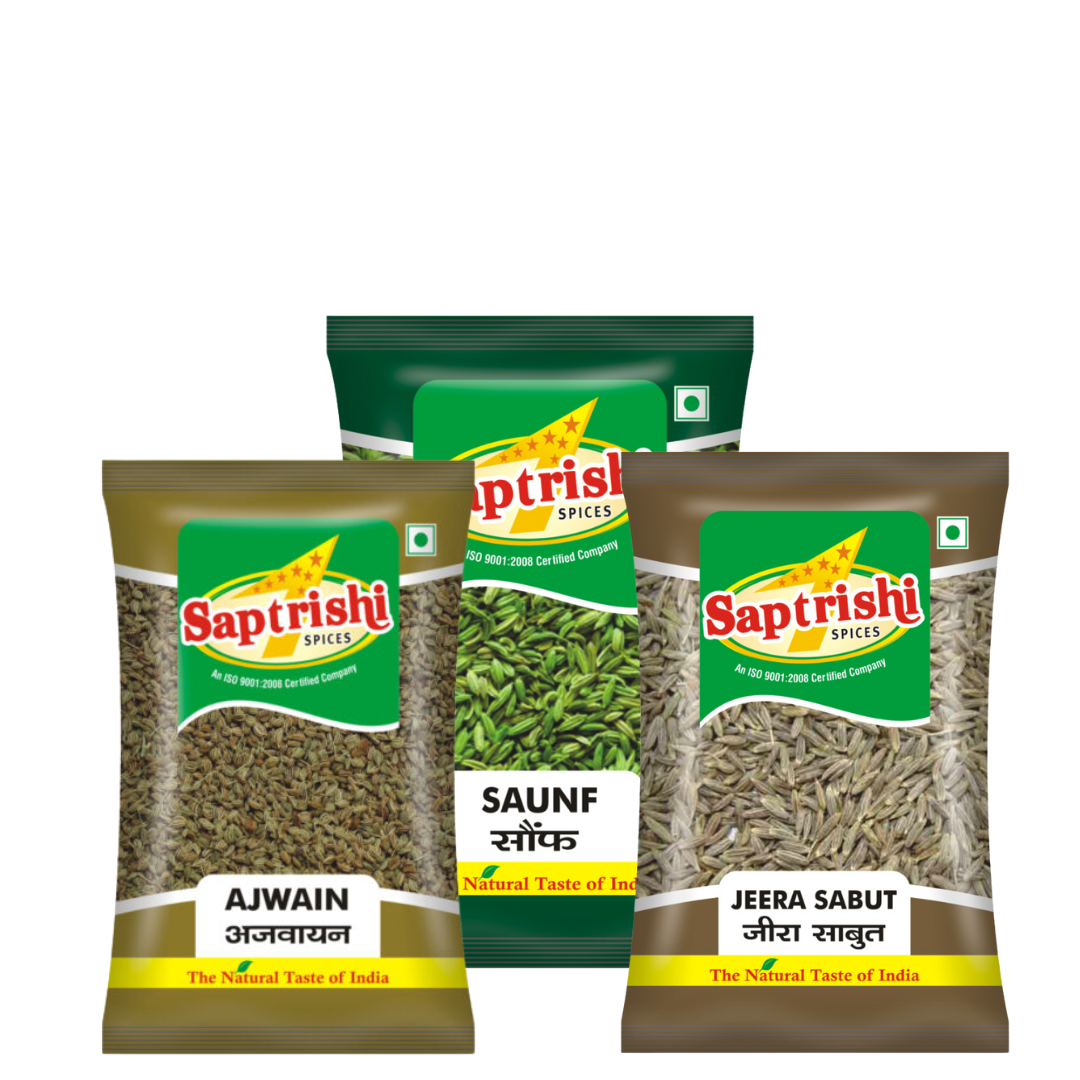
Jeera. The workhorse. Whole seeds, hot oil, and they crackle in seconds. That crackle is your signal. Miss it by a few seconds and you've got bitterness instead. Ground and roasted, it's also what makes a good raita taste like a good raita.
Dhaniya. Mild, a little citrusy, and it gives gravy its body. Hard to ruin a dish with it. That's why it goes into nearly everything. The problem is it fades fast. Smaller packs, more often. Don't buy the kilo.
Lal Mirch. Heat, yes — but which heat? Teekha and Teza are for people who mean it. Kuti Mirch, the crushed kind, gives you flakes and texture. Better on stir-fries and chutneys than fine powder is.
Amchoor. Sourness with no liquid. That's the trick of it. A pinch in chaat, in stuffed parathas, in chole. Dry sabzis wake up immediately.
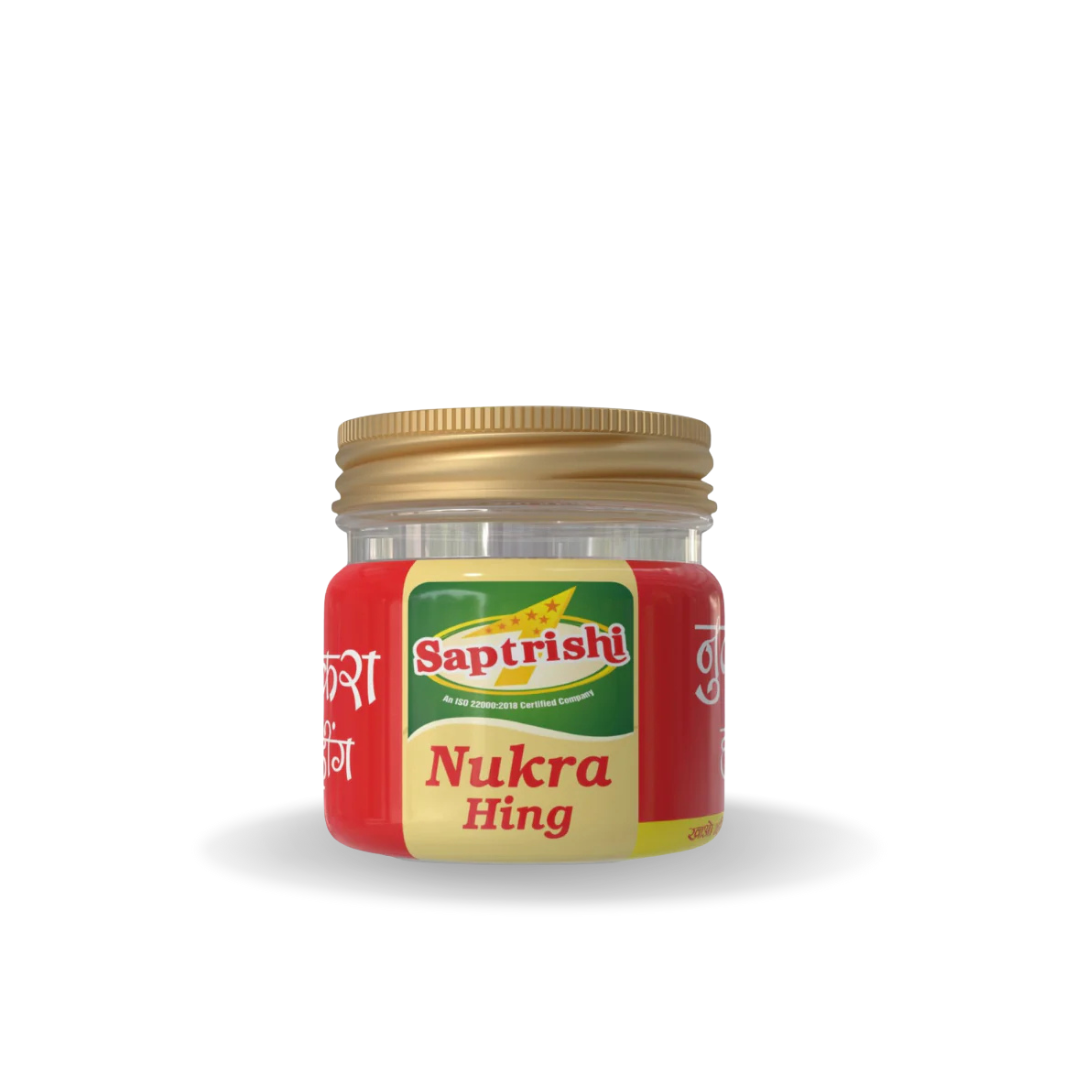
Hing. Open the packet and it's almost unpleasant. Put a pinch in hot oil and it turns into something else entirely — savoury, deep, close to onion. This is why dals rely on it.
Blends
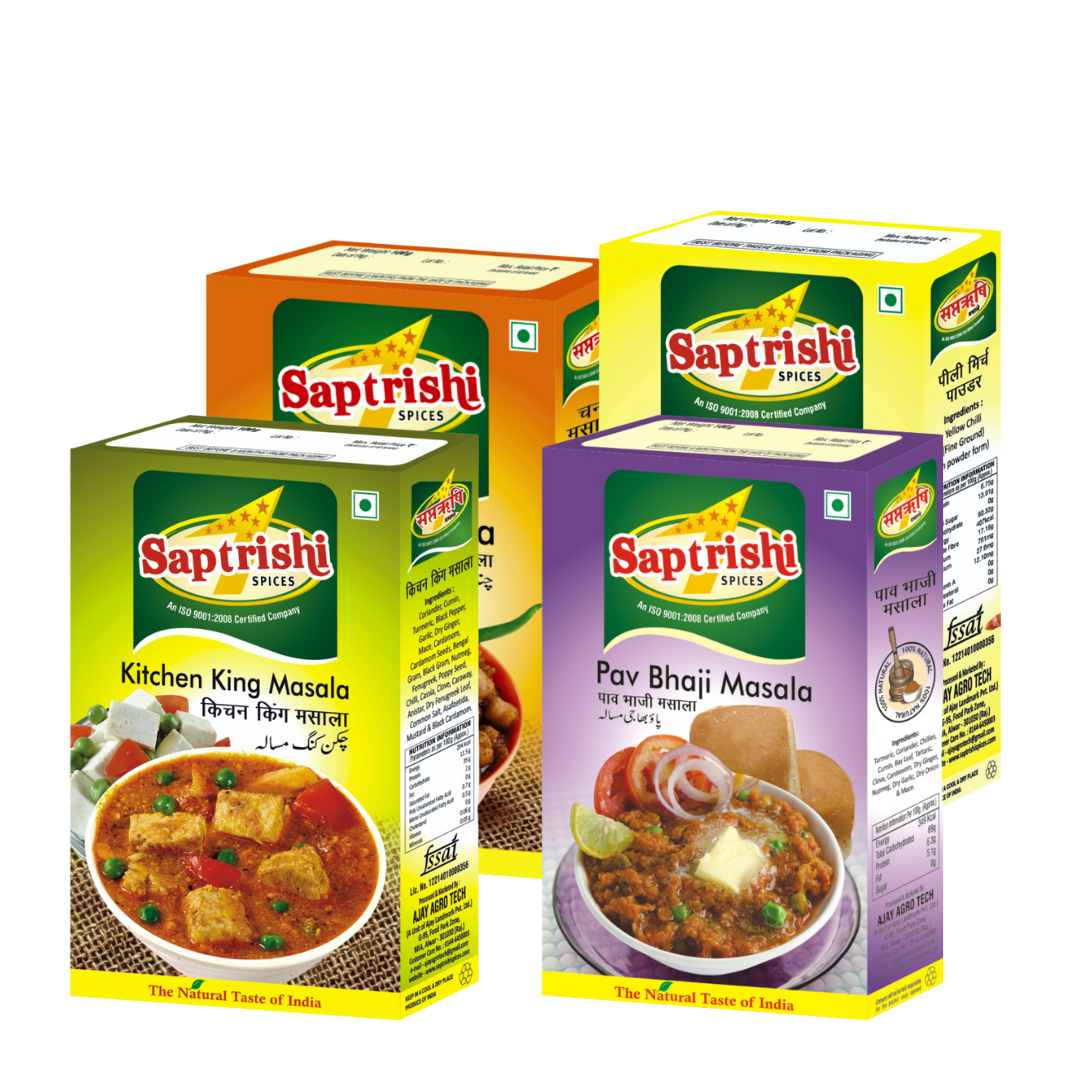
Garam masala is cinnamon, cloves, cardamom, black pepper, usually. End of cooking, not the start. Long heat flattens it. Two minutes before you switch off the flame is where it does its best work.
Pani Puri Masala — mix it into cold water with tamarind and mint and you're standing at a chaat stall again. No vendor required.
Whole or Ground?
Whole spices last because the oil stays sealed inside until you break them open. Ground ones fade in months. My rule: whole for tempering and slow cooking, ground for gravies and marinades. Toast whole spices in a dry pan for a minute before grinding. You'll smell the difference instantly.
Buying Well
- Smell it the moment you open the pack. Weak smell, weak spice.
- Colour should look like a plant, not a highlighter.
- Powder should flow. Clumps mean moisture got in.
- Slow grinding in stages keeps more aroma than fast, hot grinding.
- Food-grade packaging. Non-negotiable.
That last part is where we spend our time at Saptrishi. Multiple cleaning stages. Slow grinding. Certified food-grade packing. What you smell in the pouch is what lands on your plate.
Keeping Them Fresh
Three things kill spices: heat, light, moisture. Keep them airtight, away from the stove, out of the sun. Dry spoon only — one wet spoon and the whole jar clumps. And buy what you'll finish in a few months. A small jar you actually use beats a big one going stale.
Tadka
Learn one technique, learn this. Ghee or oil in a pan. Jeera, mustard seeds, maybe hing. Let them sizzle. Pour it over a finished dal. Under a minute, and suddenly it tastes like someone's grandmother made it.
Start Here
Four spices. Haldi, jeera, dhaniya, lal mirch. Get comfortable with those before you add anything else. Then amchoor, hing, garam masala — one at a time. You'll be surprised how fast your cooking changes.
Stocking up? Our Basic Spices collection is at saptrishifoods.com. Or build your own bundle. Code FIRST gets you 10% off your first order above ₹400.